
THE CLASH REVISITED
What were they thinking?
*
Don’t forget to hit the LIKE button if you enjoyed the piece. And consider becoming a paid subscriber to access the archives and support my work!
*
I’ve been listening to The Clash lately. Haven’t done that for many years. They sound better than I remembered. A lot better. I’m a little bit shocked how good the songs are.
It’s funny how you revisit and re-evaluate bands from the past. You feel like you really knew them the first time around. You had their records. You read about them in the music press. Their music was playing all around you.
But now with the internet, and people writing books and making documentaries, you can go back and fill in the gaps in your knowledge. You find out new things. Sometimes you rethink your opinions.
*
This happened to me with the Beatles. As a small child, I was inundated with their extravagant late-career hits, like “Hey Jude”, “Let it Be”, and “Strawberry Fields”. These songs never stopped playing on the radio.
It felt like overkill to me. Even as a child! The Beatles were Gods. They were sacred beings. And they knew it. They were pompous and self-serious. And their songs went on and on and on. And they looked stupid in those goofy hippie-era outfits.
I never bothered with them after that.
*
*
Then, in my late 40s, I re-discovered their early music. Their first singles. The first albums. Of course I’d heard these songs before but I’d never listened closely. I suddenly realized how clean and sparse and perfectly constructed their early stuff was. I had to do a complete re-evaluation.
I still disliked the late 60s Beatles. To this day, I plug my ears when I hear the symphony orchestra in “St Peppers Lonely Heart Club Band”. But now I understand their original greatness.
The odd thing is: I don’t regret that it took so long. It was fun to “discover” such an incredible moment in music history, so late in life.
Here I was, at 50, watching “Hard Day’s Night” multiple times a year, reading books, watching videos. It was like I was transported back to the 1960s. I got to experience it all again.
*
But back to The Clash . . .
The Clash were considered one of the three seminal punk bands, the others being, The Sex Pistols and The Ramones.
I was in high school in 1977 and was quick to pick up on the important shift that punk represented.
A friend lent me the first records of The Clash and the Ramones. Both sounded terrible, production-wise. But they had that high-energy, raucous power.
In contrast, the Sex Pistols first record sounded amazing. That was THE punk record, as far as I was concerned. But I stayed with the Ramones and the Clash. It became apparent that that first Clash release, was a classic in its way. As were those first Ramones records.
*
*
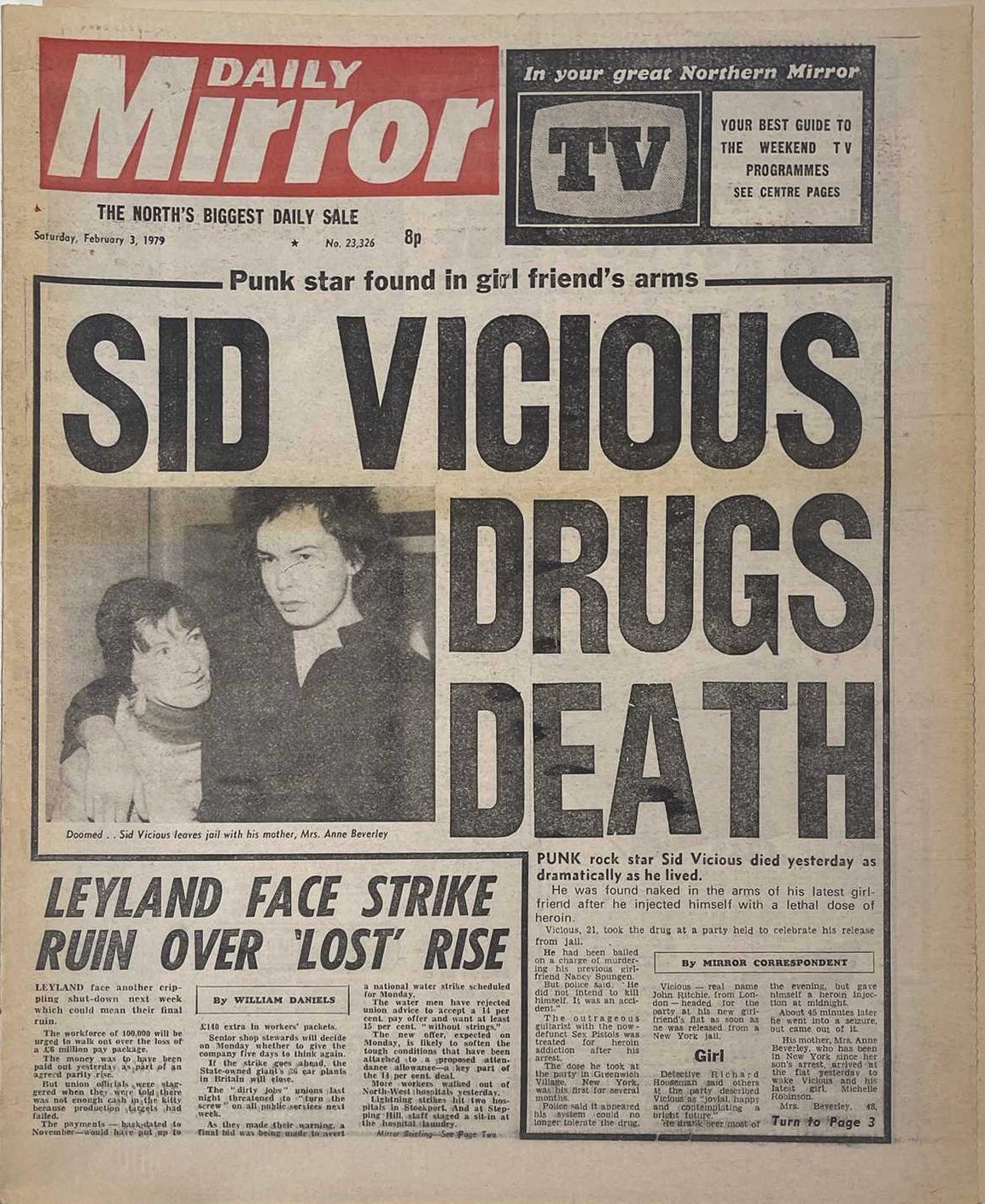
But then, almost as quickly as it came, punk rock seemed to implode on itself. The Sex Pistols broke up. Sid Vicious died.
The Ramones kept going, releasing more albums of their humorously goofy high speed rock.
The Clash reverted to a more mainstream rock sound with their second album Give Them Enough Rope.
The songs on Rope were more developed than the songs on their first record. And the production was slightly better. There definitely was some evolution going on.
Still, I wasn’t that excited about Give Them Enough Rope. There were some good songs. You’d hear them on college radio, or in clubs.
At some point I saw a picture of their singer. He had greased his hair, in the British “rocker” style. It appeared he was now doing a retro rockabilly thing. The Clash were already moving away from punk.
*
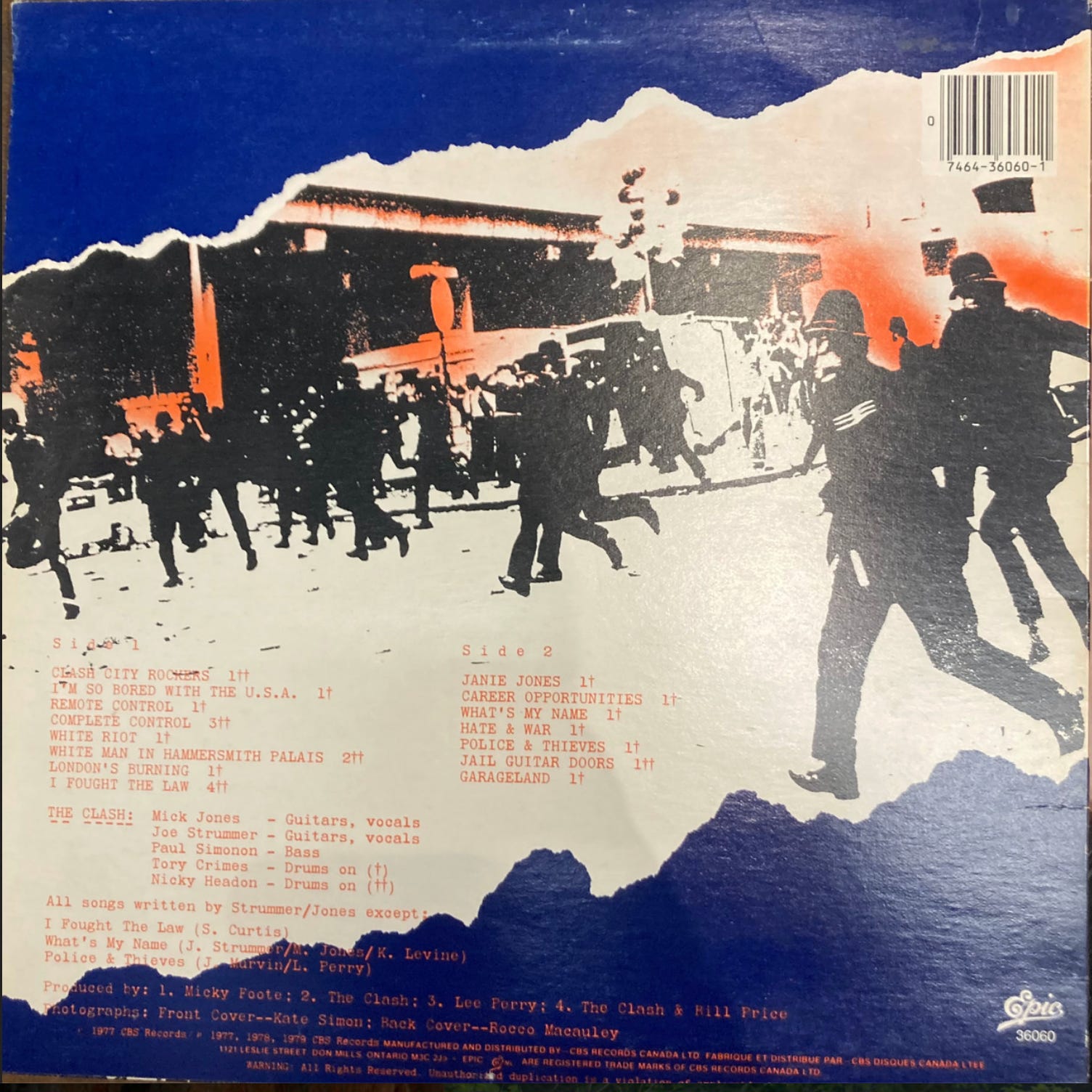
And then something weird happened. Right when Give Them Enough Rope appeared, the Clash’s excellent first album—which had continued to grow in stature and popularity—was re-released in the United States.
This happened just when I arrived at college. I started seeing that familiar first-album cover in people’s dorm rooms. But when you put it on, it had all these different songs on it. And they all sucked!
This was shocking! What happened to that first record? I could understand adding some stuff to the US release. A lot of bands did that. They’d stick in some bonus songs or more recent singles.
But the whole album was different. The very first song was different. And there were more reggae songs.
What were they doing? Were they trying to change their image? Was it a political thing? A racial thing? Did they decide punk was dead and they had to go in a new direction?
It seemed like they were obsessing over how they were perceived. Instead of just being a cool band and not worrying about what people thought.
*
Of course, this was the pre-internet days. As an American teenager, I didn’t know anything about The Clash. I didn’t know what they looked like. I didn’t know who played what instrument. I didn’t know how old they were, or what they did before they formed The Clash.
I started to wonder if they were “fake punks”. There was a lot of that going on in the late 1970s. Like, there’d be some bar band who dressed like The Bay City Rollers and played love songs, and then suddenly three weeks later, they’d reappear with a new name, chopped off hair, singing fuck-you songs like the Sex Pistols.
*
*
Whatever was going on, the situation with The Clash’s first record was devastating. The UK version was a classic. The American version was literally terrible. It was embarrassing. I couldn’t even look at it. If someone had it in their record collection, I thought: Well, this person doesn’t know anything.
From that moment on, I just didn’t care about The Clash. In my mind, they were now a roots/reggae/rockabilly band. And this was now 1979 . . . 1980 . . . there were great new bands appearing every day. There was no time to worry about a band that had clearly lost their way. And who were starting to project “sell out” vibes.
*
Then, barely a year later, they released the double album London Calling. It was much better produced then the first two records. London Calling raced up the college radio charts. Normies loved it. Rock critics loved it. People thought it was “important”. It was all over MTV.
At college, I heard the songs of London Calling coming out of people’s dorm rooms. It sounded great. But like I said, The Clash had lost me in some fundamental way.
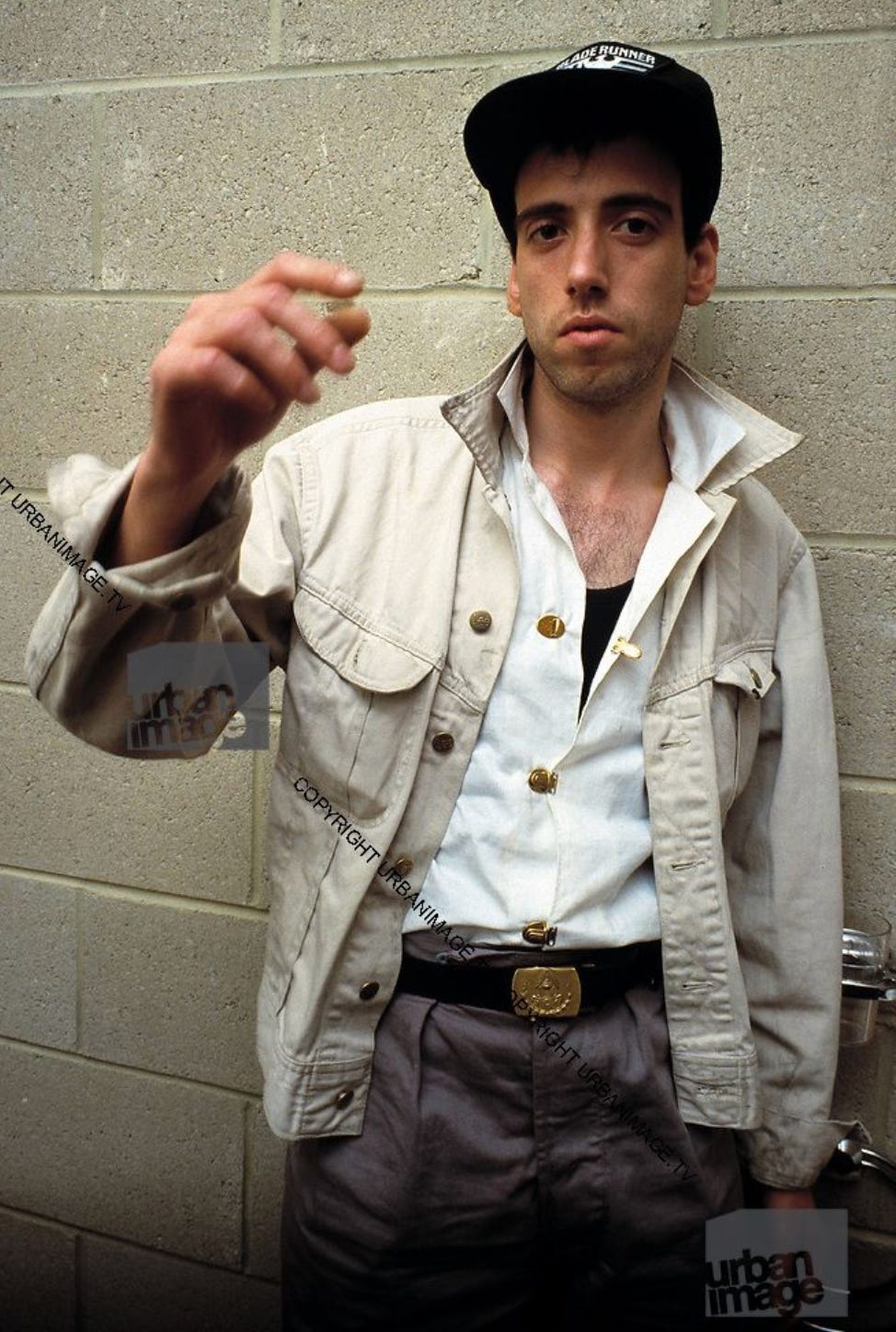
Meanwhile, because of the success of London Calling, you started seeing pictures and videos of the band. I saw their guitarist Mick Jones on stage during a concert. He didn’t look punk at all. He had long hair and looked like he was trying to be a mid-70s rock star. He looked like Peter Frampton!
In other words, they weren’t real punks. And they never had been. THEY WERE JUST GUYS WHO WANTED TO BE ROCK STARS. And PLAY IN STADIUMS. And GET GROUPIES AND DO COKE OFF OF YOUNG GIRL’S TITS.
*
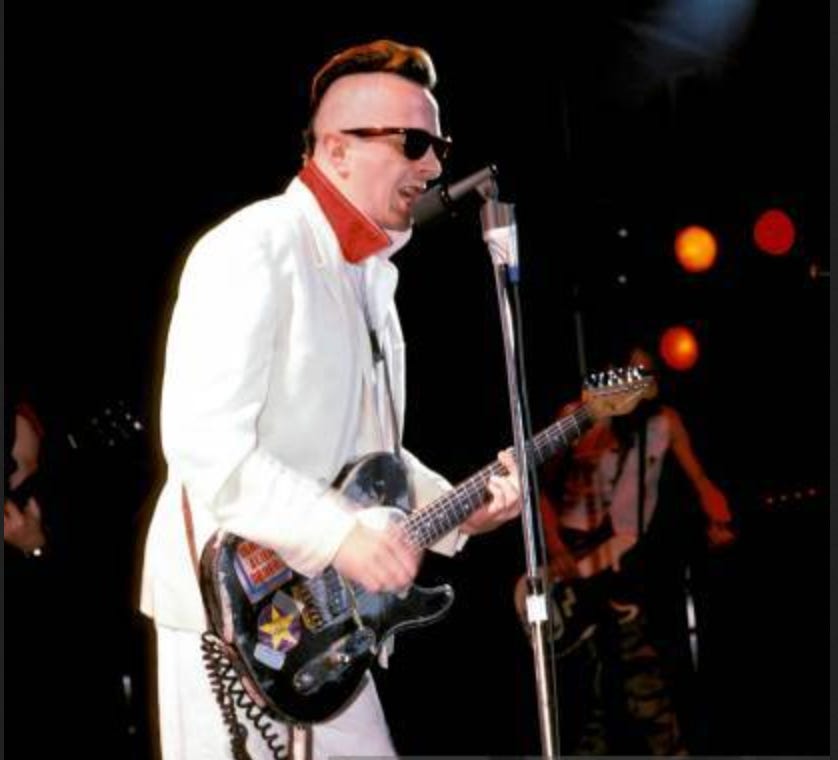
Now this didn’t turn out to be entirely true, but that’s what it looked like at the time. In one video I saw of Mick Jones, he was strutting around in ROCK GOD fashion, wearing some sort of Arena Rock jump suit.
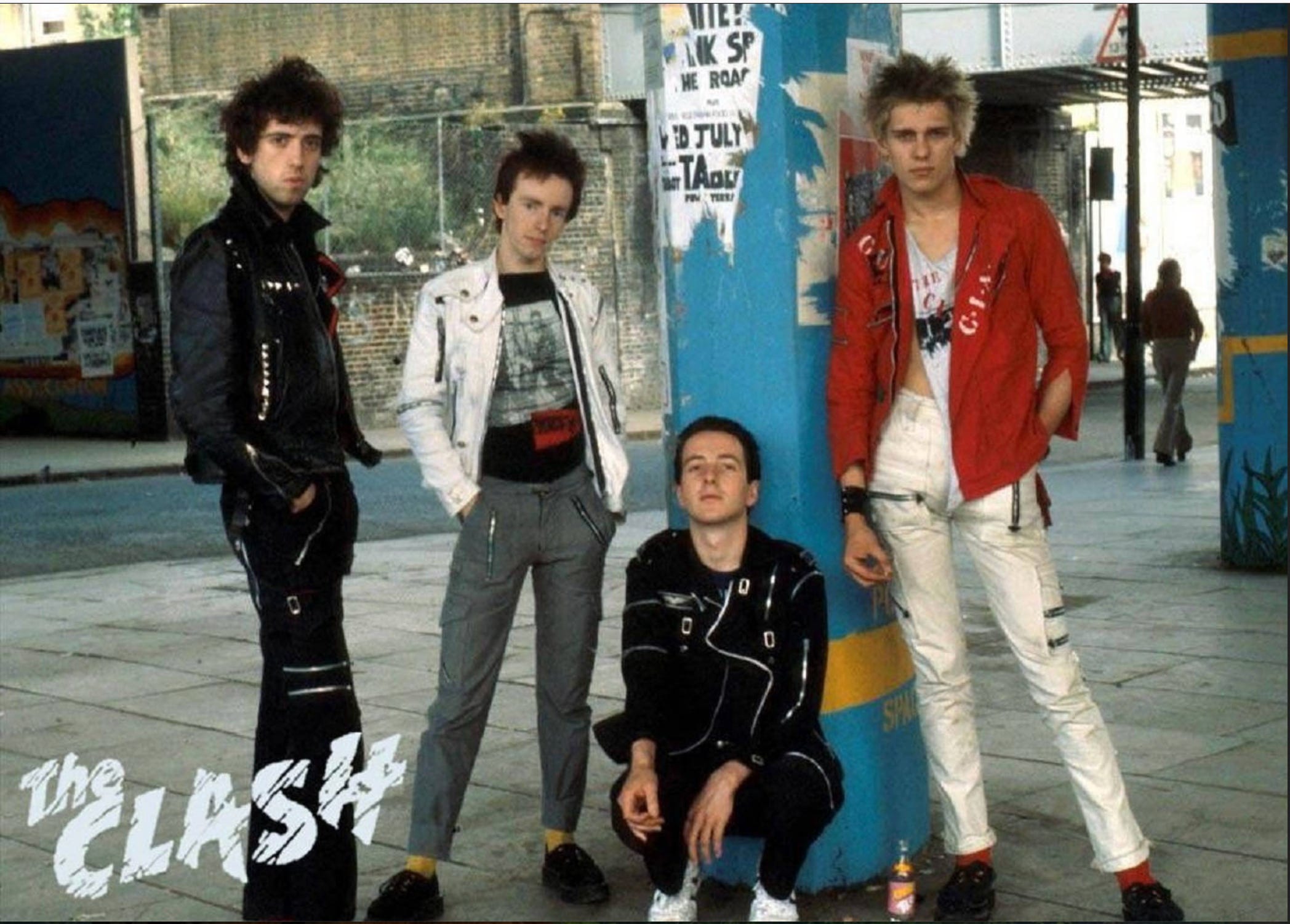
And Joe Strummer had stupid clothes too. These bright New Wave colors with political slogans written on them. And his Beatle boots and slicked back hair like he was Elvis Presley.
And Paul Simonon was copying the Sex Pistols by wearing bondage gear, or mesh t-shirts or whatever. There was just something NOT RIGHT with them.
And yes, there was that great picture of Simonon smashing his bass on the cover of London Calling. But the lettering on the album looked silly. It was PINK and GREEN. The two favorite colors of “The Preppie Handbook”!
And to make matters worse, they kept doing the reggae thing, and singing Rudy Rudy This and Rudy Rudy That. Like what was that for? To prove they could hang with the Rastas? It felt like a public relations operation in some way.
*
*
Then things got worse. In 1981, The Clash came to New York to conquer the Big Apple. That’s what they claimed they were doing. They were going to play a string of gigs at Bond’s International Casino in the middle of Times Square. (Which sounds like THE WORST IDEA EVER, as I type these words now.)
Non-New Yorkers might not understand this: but no rock band ever conquers New York. Not the Rolling Stones. Or Led Zeppelin. Or Pink Floyd. Or even Billy Joel.
Rock musicians are just wandering troubadours in the eyes of sophisticated New Yorkers. Rock music is peasant culture. New Yorkers don’t give a shit. Van Halen is the “circus” part of “bread and circuses”. Such phenomena exist to distract the masses. To occupy the proletariat.
One example: I was living in New York when Prince was at the absolute pinnacle of his fame. He played Madison Square Garden for like a week and NOBODY CARED. YOUR AVERAGE NEW YORKER DIDN’T EVEN KNOW WHO HE WAS.
That’s New York. And The Clash think they are going to conquer it? Like the Beatles did? That was not going to happen.
That’s another thing: The Clash were always copying the Beatles. They were always acting like they were three levels above where they actually were.
Which was a bit hypocritical, since they denounced the Beatles, in their early song “1977”. Back when they were pretending to be punks. Now they wanted to do everything the Beatles did. Like play at Shea Stadium. Which they eventually did. Which was probably a money grab. Just like when the Beatles did it.
*
Also, at this time, the Clash were calling themselves: “THE ONLY BAND THAT MATTERS”. Saying that about yourself was probably not the best strategy in 1980.
Some other bands that appeared at that time included U2, Echo and the Bunnymen, Joy Division, The Cure, and many others that would also matter quite a bit. Some of these bands would last for decades. Which was a lot longer than The Clash would last.
So yeah, The Clash arrived in New York and the gig turned into a disaster. The shows got shut down. Their permits were not in order.
They thought they were going to slide into New York City and play a string of gigs at a casino (?), like Frank Sinatra (?), but at the same time announce to the world that they were the most important band on the planet? When your average American hadn’t even heard of them yet?
They eventually did play the shows. But it was all very anti-climactic.
*
Meanwhile, they were doing another thing that everyone hates. Getting political.
It seemed like that’s what they were doing with the reggae influence. Like maybe there was some white guilt lurking in their souls? Or they were embarrassed by the whiteness of punk?
They wanted to be respected by the brothers! And also be intellectuals. Since they now had a lot to say about revolution, and Marxism, and waking up the masses.
Previously their politics had been general and vague. But now they were commenting on specific political situations. Which most music fans REALLY HATE.
But they did it anyway. Sandanista! was their follow up to London Calling. It was a three disk album heavily padded with obscure “Dub” music. The title, Sandanista!, referred to a Nicaraguan Socialist Rebel group.
People were like, WHAT THE FUCK?
*

*
I paid no attention to Sandanista!. I was not interested in The Clash in the least. So I don’t remember the timeline of what followed.
One seemingly important thing that happened after the Bonds Casino mess, Joe Strummer disappeared. He vanished. Nobody knew where he went. This became a media spectacle. WHERE WAS JOE!? Not even MTV NEWS, with their ace reporters (rich kids on cocaine), could find him.
What was happening? Had Joe quit the band? The press reported that he had fled to Iceland! He was having an existential crises!
Well, what do you want? He was a tortured artist. He had to look inward and search his soul.
Years later, it was revealed that he not been in Iceland, but had just popped over to France and was staying with a friend.
*
At some point just after the “Strummer in Exile” story, The Clash had their first major hit, “Rocking The Casbah” from the album Combat Rock.
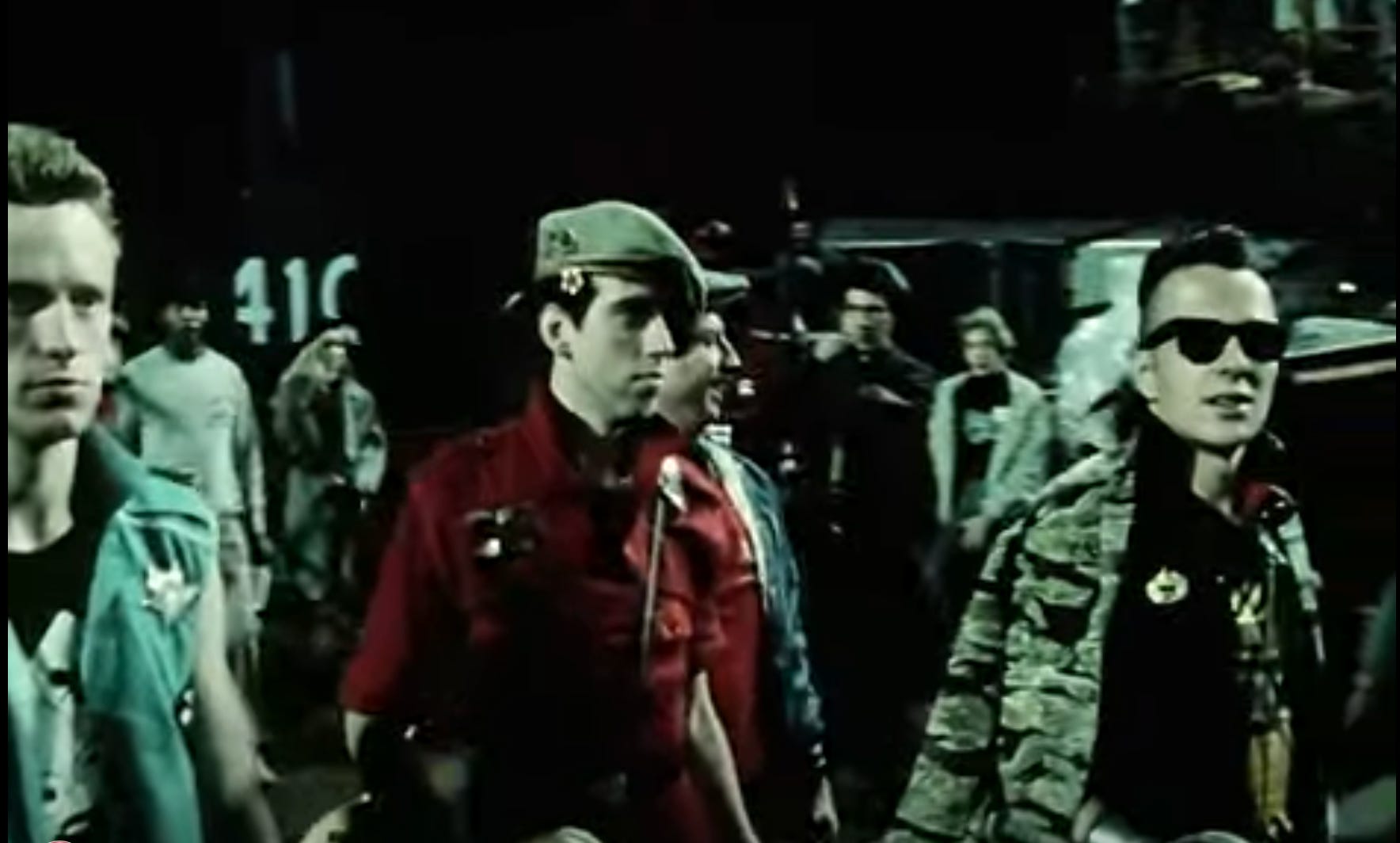
This appeared to be the dumbest song of their entire career. And the worst part: in the video for the song, which played every five minutes on MTV, Joe Strummer’s had a new mohawk. It looked amazingly stupid. Again: what was he doing? What were they thinking?
Maybe by now, it was all a big joke to them. They’d been through so much. And now they were on MTV singing a novelty song about an overweight Sheik dancing around in Bagdad?
I was like, Oh my god. What a disaster. I truly felt bad for them. They had wanted to be arena rock stars. But they hadn’t quite made it. And now they were humiliating themselves for money . . . .
*
*
So now, speed forward 40 years. I’m an older person. I live in the suburbs of my hometown. And out of nowhere, I get this hankering for the song “Safe European Home”, that I vaguely remember from when I was 19 yrs old.
So I download it onto my phone and then I bluetooth it through my car stereo and I listen to it, as well as a couple other Clash songs, while I run errands.
On my fancy car stereo, you can tell these are old recording. Contemporary music is so much clearer and more precise than the primitive recordings from the 70s and 80s.
But this song, “Safe European Home”, still sounds really good. It comes roaring out of my car stereo. And now, with no investment in the band, no stake in their motivations or intentions, I can hear that it’s a very well constructed song. More sophisticated than I remembered. With good backing harmonies and other production affects I had noticed before.
And it’s the same with the other songs. “What’s My Name” is way more than just the three cord punk song I remembered.
So then I downloaded some other Clash songs, including some the more groove-based songs like, “Charlie Don’t Surf” and “The Call Up”. Plus a few more classic punk songs from the first UK album. “I’m So Bored with the USA.”
*
All these songs are great. And the arrangements are really good. And the lyrics. The whole package. I’m kind of amazed. These are great rock songs. “The Call up” is an incredible protest song. And I don’t normally like protest songs.
And then I listen to some of the reggae songs. And even those sound good with a little distance. Considering the shitty sound quality, the Dub thing, with those thick heavy bass parts. They still hit you in the chest, in that satisfying way.
And then I come back around to London Calling, and download the title song and “Brand New Cadillac” and even “Train in Vain”, which I found annoying at the time, but now comes bubbling out of my car stereo, super catchy, fantastic beat, bouncy and electric. No wonder this was one of their biggest hits.
*
*
And then I start watching the various documentaries. And I see what they were going through. I learn what happened to Joe Strummer after the Clash broke up. And see what happened to the rest of them.
It turns out Joe Strummer was basically an orphan (as so many rockstars are). And deeply conflicted. And Mick Jones and Topper Headon both got totally mind-fucked by their sudden success, as happens.
*
The Clash lasted approximately 5 years. They seemed unable to decide if they wanted to be idealistic or capitalistic. Which might be responsible for the bad decisions around Sandanista! And some of the other records that followed.
But man. Those first three records. They are just incredible. And they must have known that. I guess being born out of a musical revolution was not the best luck. Maybe it doomed them in some ways. Their particular moment in history worked for them in some ways, and then against them in other ways.
Always with the arts, there are these stories. Great talent and great potential collide with the reality of the time and place they inhabit.
And so The Clash are remembered as a punk band. A genre of music that specialized in short careers and self-destruction. But they were so good, in so many other ways.
In any event, I was wrong to dismiss them. I admit that. But what price do I pay? None really.
In fact, I get to hear them with fresh ears, and with a new appreciation. I get to listen to the live recordings, the remastered singles and the B-sides. I get to watch the documentaries and remember what the world looked and sounded like when I was, myself, a young man and was first discovering music and culture. It’s like I’m back in 1977, all over again.
*
*
The reggae and dub thing makes more sense from a British perspective.
From the late 1960s to the early 2000s (when internet era Americanisation basically ate British music history), British and particularly London music was heavily influenced by Jamaican music. It was the dominant form of 'Black Music', hugely influential in the underground as well as dominant in the pop charts.
From the Clash or the Ruts through to Massive Attack and the Prodigy, it was just natural for a British band to simply pick up reggae and dub and general bass culture without necessarily seeing it as an external or niche form of music, as it was perceived to be in the US. It was as normal to the Brits as a white American rock band rapping or scratching would have been in the 2000s.
I like Sandinista. The first record was one that you had to buy as an import. I had both versions. The American one just added some singles like a few other bands did, like Buzzcocks and 999. I saw them on the early tours (1979-1982), and they were one of the punk/new wave bands that could actually play. Of course, bands like Public Image Limited and Gang of Four were even better.